How AI-Powered Learning Management Systems Are Redefining Student Learning and Skill Development
A couple of years back, a learning management system meant simply logging into the website, watching a video, and marking a checkbox to confirm you had done your bit. The process was moving forward, and so were you.
But all that seems to be changing at breakneck speed.
These days, learning management systems do more than just deliver content. With advancements in AI and flexible setups like customized LearnDash development, they can now adapt to a learner’s pace, level of understanding, and skill gaps instead of giving every user the exact same experience.
This transformation is fueled by artificial intelligence, and we see its results right now in the way that we learn and develop skills.
It is happening all around us, perhaps, without our noticing.
Here, let us have a look at AI-powered Learning Management Systems and their influence on our learning.
What an “AI-powered LMS” actually means
An AI-driven Learning Management System is an LMS that uses artificial intelligence ( machine learning and natural language processing) to make the learning process more intelligent, faster, and personalized.
It suggests which subjects a learner needs to learn next, depending on previous achievements.
It can evaluate essays within seconds, automatically create multiple-choice questions, and respond to learner inquiries day and night via a chatbot built using earlier course content. It can identify struggling students and notify the tutor about their problems even before they leave the course.
In short, it performs functions typical of a good tutor but on a larger scale.
Personalized learning paths, finally working.
“Personalized learning” has been talked about for years. Almost every platform claimed to offer it. In reality, very few actually did. The main reason? It was hard to pull off.
And that’s because it wasn’t easy. Building separate paths for every learner used to mean a small army of instructional designers and a budget most institutions couldn’t justify.
AI has changed this calculation. Now, an e-learning platform could assess how a student is faring in their modules and identify their strengths and weaknesses. It would then direct learners to follow particular pathways based on the assessment.
Those who have mastered basic concepts would be directed forward to advanced content, while those still having challenges would get further instruction. Learners who benefit more from video would get videos, while those who benefit more from textual explanations would get texts.
This leads to improved engagement levels and increased retention rates among learners.
The result: students stay engaged longer, finish courses at higher rates, and actually retain what they’re learning.
For institutions and training teams, this means moving away from fixed course structures and choosing platforms that can adapt in real time—otherwise, personalization remains just a feature, not a real outcome.
Faster feedback, better assessment
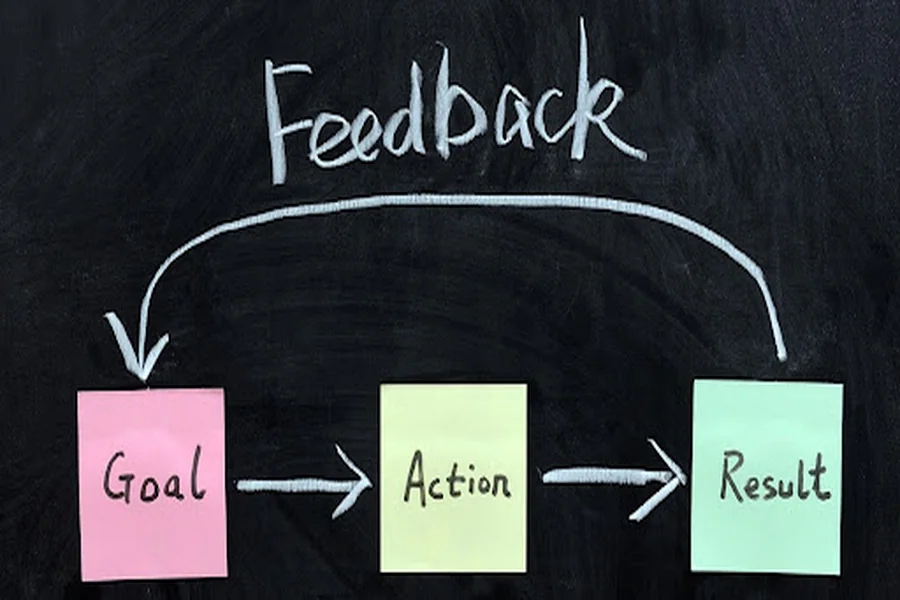
Feedback used to be the slowest component of education. The student submits an essay on Monday. It comes back with notes on Friday – too late to make a difference.
That is changing thanks to AI technology. With current LMSs, the system can analyze writing style, detect patterns of poor performance, and provide suggestions for improvement while the student still writes. Auto-grading quizzes now provide explanations along with grades rather than just ticking off whether the answer was right.
This saves teachers time since they don’t have to grade 200 essays. Instead, they have more meaningful data, allowing them to address those students who need help based on their patterns.
Easier content creation for educators and creators
Designing a course requires true effort. Artificial intelligence technology has made it easier for educators and course developers.
Artificial intelligence is being used by educators and course developers to draft initial lesson outlines, create test question banks in minutes, transcribe their videos and add captions automatically, and translate content into multiple languages without needing a large team.
These aren’t magic solutions; they save time from the boring tasks that used to consume most of an educator’s time.
The opportunity for individual creators, particularly those designing their courses on platforms such as LearnDash, has never been greater before – courses designed and managed by a single individual at production quality standards.
In the context of creating online courses in 2023, the edge lies not only in the usage of AI tools but in incorporating them seamlessly into the process.
If you’re building courses today, the advantage isn’t just using AI tools—it’s integrating them into your workflow. Even simple steps, like using AI to generate first drafts or assessment banks, can cut production time significantly without compromising quality.
The skill development angle
Besides educational institutions, the larger effect lies in workplace training.
Businesses need to train employees in skills they lack. Yet conventional methods cannot keep pace. The job requirements change every two years. The technology tools change every quarter. Conventional training courses fail to respond dynamically.
However, AI-driven LMSs do. These systems allow tracking the skills development process in teams and their deficiencies, offering relevant material accordingly. AI enables simulating realistic situations (coding exercises, customer interactions, management decisions), grading users in real-time based on their performance.
It means that the learners get relevant content. Employers receive a skilled workforce.
The companies investing in proper LMS development right now, with AI built in from the start, are setting up systems that’ll keep working three platform shifts from now. The ones still buying off-the-shelf tools without an upgrade path are quietly falling behind.
What to watch out for
For all the upside, AI in learning isn’t perfect.
The biggest concerns are honest ones. Bad data produces bad recommendations. If the model isn’t trained on diverse examples, it may favor learners who fit its assumptions and quietly disadvantage everyone else.
Over-reliance on automated feedback can flatten the human judgment that good teaching depends on. And privacy is a real question: every adaptive system depends on learner data, and learners (especially younger ones) deserve to know what’s being collected and why.
These aren’t reasons to avoid AI. There are reasons to deploy it thoughtfully, with humans still firmly in the loop.
The practical approach isn’t to avoid AI, but to introduce it in controlled layers—start with low-risk use cases like auto-grading or content generation, then expand into personalization once you trust the system.
| Quick self-assessment: Is your learning platform AI-ready?
Answer yes or no to each question. 1. Does your current LMS personalize content paths based on learner performance? 2. Can your LMS provide automated, real-time feedback on assignments or quizzes? 3. Are you using AI tools to help generate, translate, or update course content? 4. Does your platform track skill gaps at the team or individual learner level? 5. Do you have a clear, communicated data privacy policy for learner information? Score 4–5 yes: Your LMS is keeping up with the shift. Keep refining what’s already working. Score 2–3 yes: You’re partly there. The next 18 months are when this gap matters most. Pick one weak area and close it this quarter. Score 0–1 yes: You’re behind, but the gap is closeable. Start with one feature, like personalized paths or auto-graded feedback, and build from there. If you answered “no” to most of these, the priority isn’t a full system overhaul—it’s starting with one high-impact AI capability and building from there. |
Conclusion
However, most modern Learning Management Systems are only tapping into a small fraction of what AI can offer, using only a limited number of functions.
The future, however, seems much brighter.
Over the next couple of years, you can expect LMS platforms to be increasingly integrated with artificial intelligence, offering constant improvements in content, real-time support, and personalized learning paths that evolve along with the user.
The winning systems of tomorrow are those that recognize AI not as another function but as an integral part of the platform. True innovation here does not mean automation; it means moving decision-making closer to the end-user and ensuring a level of adaptability that mirrors human learning.
This approach will have its benefits for all parties involved. Students will enjoy a learning process that adapts itself to their thought patterns. Teachers will focus less on delivering the content and more on its effect on learners.
The shift is already underway. The real question isn’t whether AI will reshape learning—it’s whether your system is designed to keep up, or still built for a model that’s already being left behind.
Frequently asked questions
Is learner data safe in an AI-powered LMS?
That depends entirely on who built the platform and how seriously they take security. A trustworthy vendor will be able to tell you exactly what data they collect, where they store it, who has access to it, and what happens to it if you decide to stop using their product. They will also follow whatever rules apply to your situation, things like GDPR in Europe or FERPA for schools in the United States.
What’s the difference between an AI-powered LMS and an adaptive learning platform?
The two overlap a lot, but they are not the same thing. An adaptive learning platform changes the lesson path based on how a student is doing. An AI-powered LMS includes adaptive learning, but it does a lot more beyond that. It can generate quiz questions, grade essays, recommend resources, translate course content, run a chatbot to handle student questions, and flag learners who look like they are about to drop off.
Can solo course creators benefit from AI in their LMS?
Probably more than anyone else, to be honest. When you are running a course business on your own, all the work that bigger institutions split across a team ends up on your shoulders. AI shifts that math in a real way. It can transcribe your lecture videos, generate captions, draft quiz questions from your content, translate your course into other languages, and handle the first wave of student questions through a chatbot.
What does it cost to add AI features to an existing LMS?
Pricing in this space is honestly all over the place. Some LMS providers have started bundling AI features into their standard plans at no extra cost. Others treat AI as a premium add-on and charge a separate fee per user or per month. If your needs are very specific, you might be looking at custom development, which costs more upfront but pays off once you are running training at any real scale.