Capital in Business: Types, Importance, and How It Works
One of the most basic concepts in business and entrepreneurship, but also one of the most misunderstood concepts in economics is capital. In its simplest connotation, capital can be defined as the assets and resources a business utilizes to generate income and value. However, the notion is much more than merely money in a bank account. Capital refers to financial resources, material resources, intellectual property, human skills and social networks and it is imperative to know the various types of capital that an individual can possess when managing, funding or even learning a business.
What Is Capital in Business?
Capital in a business context can be defined as anything that can be utilized to produce economic value. This is money, of course, but also equipment, buildings, patents, brand equity, and knowledge and skills of employees. Classical economic definition of capital highlights the difference between capital and land and labor as one of the three main factors of production. In contemporary business, capital will be perceived to be in a wider sense as all the resources that can be used to generate goods and services or to increase business activities or competitive advantages.
Money is not capital. One type of capital is money, but this can only be considered business capital when it is in use or being held as a means of generating an economic return. The amount of money in a personal savings account is savings. Capital is cash invested in a startup with the prospect of making a profit.
Types of Capital in Business
Business owners, investors, and other individuals dealing in financial management should have knowledge of the various types of capital. All types have different contributions to the operation and growth of a business.
Financial Capital
Most people will think of financial capital when the term capital is mentioned in the context of business. It is defined as the cash and liquid assets that a business has to invest and operate. Two main mechanisms are used to raise financial capital: equity where ownership interests in the business are sold, and debt where funds are borrowed that will have to be repaid with interest. Most startups use venture capitalists and angel investors to provide equity financing, and banks can provide debt financing in form of bank loans and bonds to well-established businesses.
Equity/debt ratio is a very important financial management choice. Excessive borrowing puts an obligation on the repayment, which may jeopardize the business in the periods of low activity. Being solely equity-based dilutes ownership and devalues the control of founders. One of the primary issues in financial management is identifying the ideal capital structure of a business based on its stage, industry and risk profile.
Physical Capital
Physical capital also known as real capital is a set of physical assets that a business is using in its operations. This encompasses machinery, equipment, buildings, vehicles, computers and all other physical means of production. The physical capital is what enables a manufacturing firm to produce goods, a restaurant to cook food or a logistics firm to deliver packages. Capital expenditure (also known as investment in physical capital or capex) is a significant financial investment which is likely to yield returns in the course of several years.
The accounting concept of depreciation of physical capital, or the break down of value of equipment as it ages and wears, is a significant concept to take into account in a real business planning. Companies need to keep on reinvesting in physical capital so that they can remain productive.
Human Capital
Human capital is the knowledge, skills, experience and creativity of the workforce of the business. Human capital is a common type of valuable capital owned by the business in the knowledge-based industries. Having the capacity to attract, retain and develop talent individuals is a major competitive edge. Hiring practices, training and development programs, compensation and benefits and organizational culture are some of the ways in which business invests in human capital.
The human capital is special in the kind of capital since it cannot be owned by the business. Knowledge and skills are a part of employees and hence losing key employees is a real loss of capital. That is why knowledge management and institutional memory are significant strategic issues of developing business.
Intellectual Capital
Intellectual capital refers to patent, trademarks, copyrights, trade secrets, proprietary processes and other intangible assets that are able to offer protection in competition and even result in economic value. In the case of technology companies, pharmaceutical companies and media companies, intellectual capital may be even more valuable than physical capital. Intellectual capital protection and management via legal means is a specialty in its own right.
Social Capital
Social capital is the value of networks, reputation and relationship. The relationship of a business with the customers, suppliers, partners, investors, regulators and the community at large is a sort of capital that can be used commercially. Social capital manifests itself through brand reputation, customer loyalty, and relationships with other players in the industry. To help entrepreneurs and investors gain insight into the interaction of various types of capital, sources like onpresscapital offer expert analysis and commentary on how business financing, investment policy, and capital management relate in various phases of firm development.
How Businesses Raise Capital
The way in which a business raises capital is based on its level of development, industry, financial history and expansion goals. Startups that are at an early stage and have no income usually depend on founder savings, friends and family funding, and angel capital or pre-seed venture capital. The more the businesses expand and start generating revenue, the more capital sources they will have access to.
Venture capital is provided to startups that have been proven to have growth potential, especially in technology and other high-growth sectors. Venture capitalists can make investments in the form of stock options and board memberships and offer more than just funds but also advice and connections.
Established businesses that have a history of revenue and collateral can obtain bank loans and lines of credit. Such debt instruments do not dilute ownership but give rise to repayment obligations. In the case of larger companies, corporate bond issuances allow large companies to access capital markets to finance large amounts of debt.
The private equity firms invest in more mature firms, usually acquiring majority ownership and striving to enhance operations and financial performance and then selling them later. Public issues in the stock markets offer access to the widest capital source to businesses who comply with the regulatory standards, as well as those who are willing to accept the transparency and governance requirements of a public company.
Capital Allocation and Management
Half of the battle is to raise capital. The way a business uses and utilizes its capital will dictate whether the business will meet its growth goals and provide profits to investors. Capital allocation decisions involve the extent to invest in research and development, the extent to enter new markets aggressively, the extent to maintain a cash buffer against uncertainties and whether to pay out capital to shareholders in the form of dividends or share buybacks.
One of the main reasons why businesses fail is poor allocation of capital. Comitting a lot of money in low-paying projects, having too much cash lying around with no interest, or borrowing money under poor conditions all annihilate value in the long-run. Great capital allocation on the other hand, which is compounded over the years is the trademark of the most successful businesses to date.
Working Capital: The Engine of Daily Operations
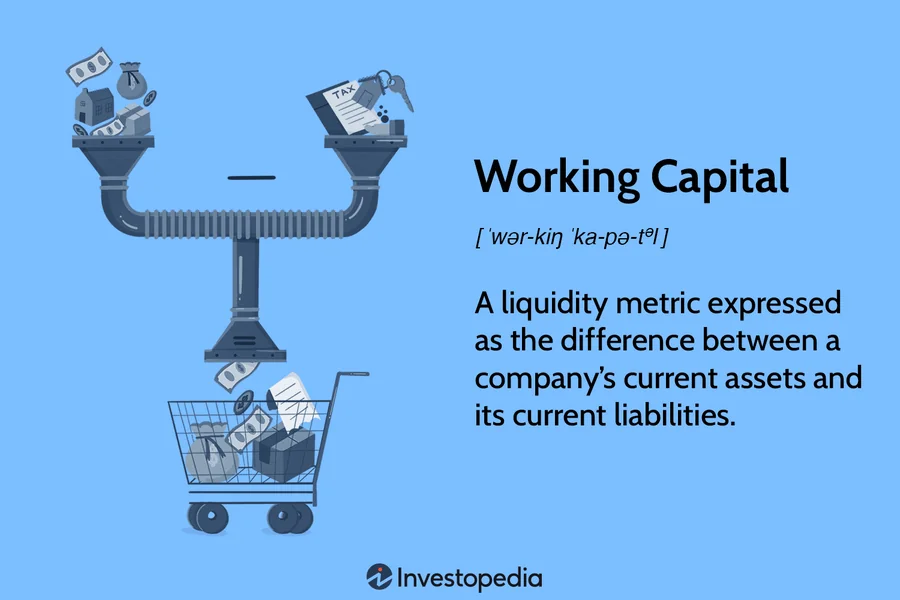
Working capital is a particular gauge of the short-term financial well-being of a business. It is obtained by subtracting current liabilities and current assets and indicates the amount of money that can be used in the daily operations. The minimum level of working capital is required to pay employees, buy inventory, cover rent, and other short-term liabilities. A company may be lucrative on paper and yet collapse due to lack of working capital which is referred to as cash flow crisis.
Working capital management includes maximizing collection of customer payments within the accounts receivable, inventory management to prevent a large amount of cash in unsold goods on the shelf, and negotiating good payment terms with suppliers. Even many expanding businesses with high revenue bases are faced with working capital difficulties when they end up growing at a faster pace than the cash flow available to sustain them.
FAQs
What is the difference between capital and money in business?
Money is one form of capital, but capital is a broader concept that includes any resource used to generate economic value. Equipment, patents, skilled employees, and brand reputation are all forms of capital. Money only functions as business capital when deployed with the expectation of generating return.
What is the most important type of capital for a startup?
For early-stage startups, financial capital is most immediately pressing, as it funds operations before revenue is established. However, human capital, meaning the skills and expertise of the founding team, is often the most decisive factor in whether a startup succeeds or fails.
What does it mean for a business to be well-capitalized?
A well-capitalized business has sufficient financial resources to fund its operations, meet its obligations, and invest in growth without excessive financial stress. The appropriate level of capitalization varies by industry, business model, and growth stage.
How does capital structure affect business performance?
Capital structure, the mix of debt and equity financing, affects a business’s financial risk, cost of capital, and flexibility. Higher debt levels increase financial risk but can also increase returns on equity when the business performs well. Finding the right balance depends on factors including industry norms, the stability of cash flows, and the strategic plans of the business.
Can a business have too much capital?
Yes. Excess capital that is not deployed productively earns little or no return, which reduces overall business efficiency. Investors expect businesses to deploy capital into activities that generate returns exceeding the cost of capital. Businesses holding excessive cash are sometimes targeted by activist investors who argue the capital should be returned to shareholders.
What is the difference between equity capital and debt capital?
Equity capital is raised by selling ownership stakes in the business. It does not require repayment but dilutes existing shareholders. Debt capital is borrowed money that must be repaid with interest. It preserves ownership but creates repayment obligations that must be met regardless of business performance.