How Automation Reduces Procurement Delays And Improves Business Efficiency
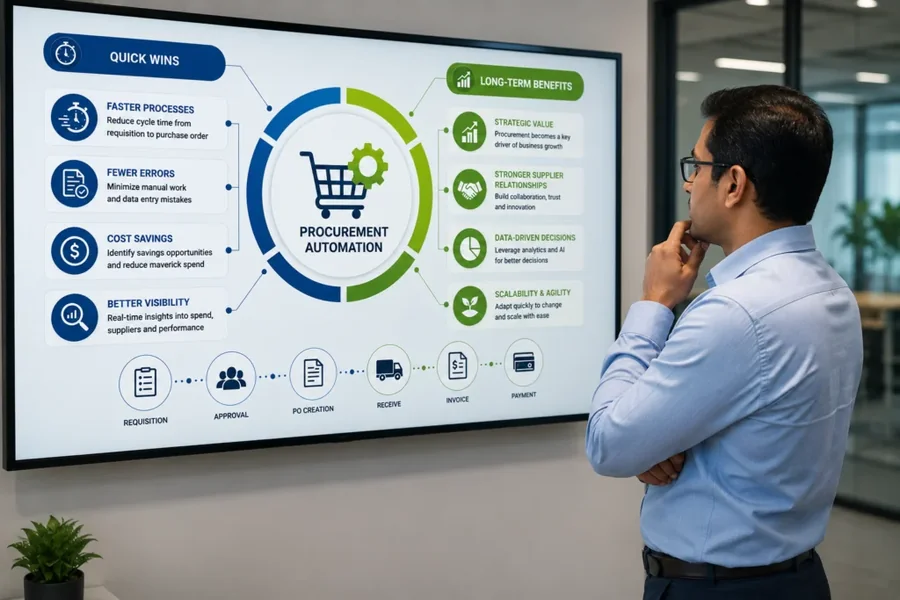
Any acquisition a company purchases, from raw materials to software, office supplies to services and so on, impacts productivity and profitability. However, procurement teams can spend a considerable amount of time on the approvals, comparing suppliers’ quotes, editing invoices that don’t match, and making manual changes. Such repetitive activities cause unwanted chain reaction delays throughout the organization. AI-Powered Procure to pay software takes the procurement process and automates it intelligently for organizations to ensure smooth and accurate purchasing processes without any disruptions.
The Growing Cost of Manual Procurement
Even today, many organizations rely on spreadsheets, emails and isolated software applications for completing purchasing tasks. They might appear simple to abide by in the beginning, but they turn into more difficult to deal with as the shopping goes on.
Manual approvals may be sitting in inboxes, supplier information may be outdated, invoices require multiple re-checks and purchasing records may be in various systems.
Automation can solve these problems by integrating all the procurement processes into a single, streamlined process with information flowing automatically rather than manually throughout the process.
Building A Faster Purchasing Workflow
Automation streamlines procurement and facilitates a connected process of all steps. The entire purchase request, approval, purchase order, delivery and invoice processes are combined into one streamlined flow.
Purchase requests can be approved on a pre-determined flow depending on department, budget, spending maximums etc. Purchase orders are created immediately when approved and sent to suppliers, meaning they don’t have to enter any information twice.
As each transaction has to go through standardized processes, procurement teams encounter fewer administrative delays and gain full visibility into the transactions they are involved in, creating a more efficient sourcing and procurement process.
Improving Supplier Collaboration
Effective supplier management relies on good communication and documentation. Due to delayed purchase orders, unclear requirements or lack of communication, deadlines can be missed and the supply chain is disrupted.
Automation provides a consolidated environment with supplier information, contracts, quotations, delivery schedules and performance records all organized and available.
This improved partnership can enable suppliers to be more responsive, and procurement teams can see how the supplier is performing over time. This can help to leverage some better pricing, better service and better long-term relationship building. The outcome is better sourcing and procurement processes based on good information rather than parts of communication.
Eliminating Approval Bottlenecks
One of the major factors that cause inefficiencies in procurement are approval delays. Often purchasing is delayed for days when managers are not available or there is an incomplete request for approval.
Automation allows for predefined approval workflow, meaning that requests are automatically pushed to the right decision makers. Digital notification and reminders shorten waiting times and digital approval histories enhance accountability.
Managers can check requests with full purchasing details, such as budgets, supplier information, and past purchases, facilitating quicker and informed decisions. When approvals can be more predictable, procurement teams can manage purchasing activities more consistently from one department to another.
Strengthening Financial Visibility
Businesses need to have correct buying data for good financial decisions. Unfortunately, in manual procurement, the purchasing details will be stored in several departments and their software, which will give limited visibility.
Automated procurement systems are systems of systems that include a single dashboard with real-time data on the organization’s expenditure.
Finance and procurement staff can track budget usage, identify spending patterns, check supplier performance and flag anything unusual that is being purchased in real time, all without having to wait for the monthly reports. The enhanced transparency aids in better money management and enables companies to spot opportunities for saving on unnecessary costs.
Supporting Smarter Decision Making
Automation isn’t just about removing repetitive tasks. It generates dependable information to aid in making sound strategic decisions throughout the company.
The historical purchasing data supports procurement teams in understanding the supplier reliability, comparing pricing trends, forecasting purchasing needs, and negotiating contracts.
The advanced reporting features also enable leadership to gain a clearer understanding of how to optimize their operations that might not be apparent in manual processes. In some cases, the predictive features of AI-powered procure to pay platform solutions can help organizations identify opportunities for suppliers, spending patterns, and areas of risk for purchases before they become bigger operational issues.
Enhancing Accuracy With Intelligent Data Processing
When large amounts of procurement data are manually inputted, a human error will occur. Supplier information is incorrect, duplicate purchase orders, incorrect invoice amounts or missing documentation may pose expensive operational issues.
Automation significantly reduces these risks by validating information before transactions move forward. Intelligent systems compare purchase orders, invoices, and delivery records automatically to identify inconsistencies before payment processing begins. Organizations can identify discrepancies before payments are made, avoiding financial losses and administrative burden, rather than only finding errors after they have been made. Better accuracy also improves financial reporting, providing more reliable business planning and compliance information about procurement.
Creating Scalable Procurement Operations
Business growth will cause procurement to become more complex.The growth of the business will make the procurement process more complex. Demands on the system from new suppliers, new departments, new product lines, and increased volume of purchases create the need for more complex and difficult sourcing and procurement.
Manual procurement systems are usually ineffective at scaling with increased volume of transactions, because the more transactions that occur, the more work that needs to be done to keep the system running smoothly.
With automation, companies can scale their buying activities without scaling their burden. Standardized workflows stay the same no matter how many transactions are being conducted; automated validations ensure accuracy as procurement activity increases.
Conclusion
Intelligent procurement technology is helping organizations become more efficient and ready for the future demands of the business as they’re modernizing their purchasing processes using an AI powered procure to pay system. This saves procurement teams time and resources from repetitive administrative tasks, thereby enabling them to dedicate more time to their other strategic initiatives that contribute measurable value. Automation is reshaping procurement by eliminating inefficiencies and streamlining intricate processes, while also providing greater visibility of finances and minimizing human mistakes and supplier miscommunication. If your business is seeking to leverage any of these capabilities, then Procol has solutions available to help you make your business more ‘smarter’ and ‘connected’ in the way you conduct procurement.
Choosing where to play starts with understanding what an operator actually offers new members. Welcome packages vary widely between casinos, and the headline percentage rarely tells the whole story. Reading the terms before depositing saves both money and frustration later on.
How Casino Welcome Bonuses Really Work
A typical match bonus doubles your first deposit, but wagering requirements decide whether that credit ever becomes withdrawable cash. Players weighing packages often Slotlair before committing, since side by side terms make the differences obvious. Look at the multiplier, the eligible games and the expiry window together rather than judging an offer on its size alone.
| Element | What to Check |
|---|---|
| Playthrough | How often the bonus must be wagered |
| Game weighting | Which titles count toward it |
| Expiry | How long the credit stays valid |
- Check the maximum bonus amount before depositing
- Confirm which slots count fully toward wagering
- Note the expiry date on unused bonus credit
Bonuses reward patience more than speed. Claiming every available offer usually leads to locked balances and unmet conditions, while picking one package that suits your budget keeps play manageable. Set a deposit limit first, treat the bonus as extra entertainment time, and withdraw once the terms are genuinely cleared.