Tokenization Explained: Converting Real-World Assets into Digital Securities
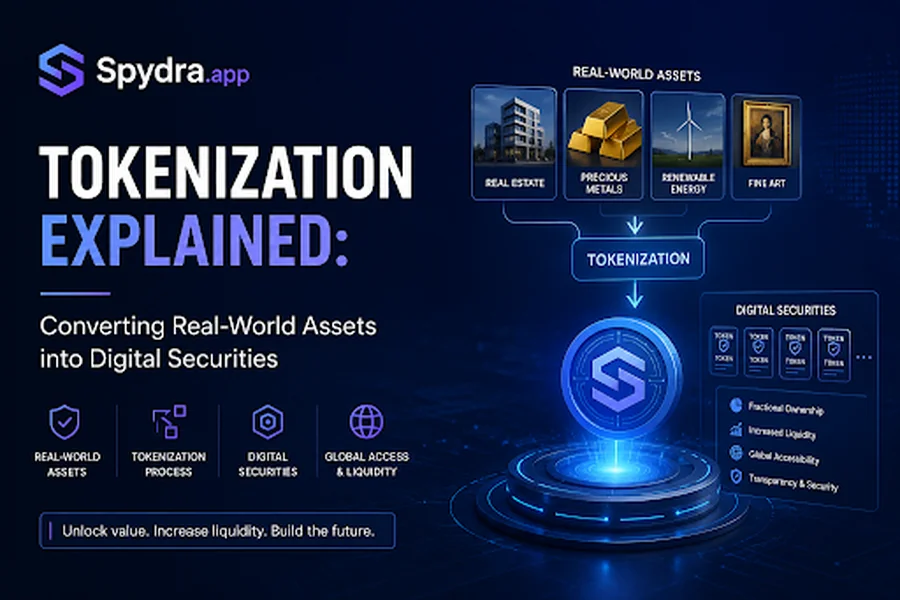
The financial world is undergoing a profound transformation as blockchain technology reshapes how assets are owned, traded, and managed. One of the most significant innovations emerging from this evolution is asset tokenization—the process of converting ownership rights in real-world assets into blockchain-based digital securities.
From commercial real estate and private equity funds to insurance-linked securities and renewable energy projects, tokenization is creating new opportunities for issuers and investors alike. By enabling fractional ownership, increasing liquidity, and automating compliance, tokenized assets are helping bridge the gap between traditional finance and digital markets.
As institutional interest in Real-World Asset (RWA) tokenization continues to grow, understanding how tokenization works and why it matters has become essential for businesses, financial institutions, and investors.
What Is Asset Tokenization?
Asset tokenization is the process of representing ownership rights or economic interests in a real-world asset through digital tokens recorded on a blockchain.
These tokens can represent:
- Equity ownership
- Debt instruments
- Revenue-sharing rights
- Fund interests
- Real estate ownership
- Commodity-backed assets
- Insurance-linked securities
Unlike cryptocurrencies such as Bitcoin or Ether, tokenized assets are backed by identifiable real-world assets or legally enforceable rights. The blockchain serves as the infrastructure for recording ownership, facilitating transfers, and automating transactions.
In essence, tokenization transforms traditionally illiquid assets into programmable digital securities that can be managed more efficiently and accessed by a broader range of investors.
What Are Digital Securities?
Digital securities, often referred to as security tokens, are blockchain-based representations of traditional securities.
They provide investors with legally recognized rights such as:
- Ownership interests
- Dividend distributions
- Profit-sharing arrangements
- Voting rights
- Debt repayment claims
Unlike utility tokens that primarily grant access to a product or service, digital securities are designed to comply with securities regulations and investor protection requirements.
Key characteristics include:
Regulatory Compliance
Security tokens are issued under applicable securities laws and often require investor verification procedures.
Legal Ownership
Ownership rights are linked to legal agreements, trusts, funds, or Special Purpose Vehicles (SPVs).
Programmability
Smart contracts can automate compliance checks, distributions, reporting, and transfer restrictions.
As a result, digital securities combine the legal certainty of traditional financial instruments with the efficiency of blockchain technology.
How Real-World Asset Tokenization Works
The tokenization process typically follows several structured stages.
1. Asset Selection and Valuation
The issuer identifies a suitable asset and establishes its value through professional assessment.
Examples include:
- Office buildings
- Infrastructure projects
- Private equity portfolios
- Insurance-linked investments
- Renewable energy assets
2. Legal Structuring
A legal framework is established to connect token ownership with underlying asset rights.
Common structures include:
- SPVs
- Trusts
- Investment funds
- Corporate entities
3. Compliance and Regulatory Review
Issuers determine:
- Jurisdictional requirements
- Investor eligibility rules
- Securities regulations
- KYC and AML obligations
4. Smart Contract Development
Smart contracts are programmed to manage:
- Token issuance
- Ownership records
- Transfer restrictions
- Compliance controls
- Dividend payments
5. Token Issuance
Digital tokens are created on a blockchain and distributed to approved investors.
6. Investor Onboarding
Investors complete:
- Identity verification
- Accreditation checks
- KYC procedures
- AML screening
7. Secondary Trading
Depending on regulatory permissions, tokens may be traded on approved digital asset marketplaces.
8. Lifecycle Management
The issuer manages:
- Corporate actions
- Investor communications
- Reporting obligations
- Distributions
- Compliance updates
Types of Assets That Can Be Tokenized
The scope of tokenization continues to expand across multiple sectors.
Real Estate
- Commercial buildings
- Residential developments
- Multifamily properties
- Industrial facilities
Private Equity
- Venture capital funds
- Growth-stage companies
- Buyout funds
Infrastructure
- Roads
- Airports
- Telecommunications networks
- Data centers
Renewable Energy
- Solar farms
- Wind projects
- Battery storage systems
Commodities
- Gold
- Silver
- Oil reserves
- Agricultural assets
Insurance Products
- Insurance-linked securities
- Reinsurance contracts
- Catastrophe bonds
Carbon Credits
- Verified carbon offsets
- Environmental assets
- Sustainability projects
Fine Art and Collectibles
- Paintings
- Rare automobiles
- Luxury collectibles
Real Estate Tokenization: Unlocking Property Investment
Real estate tokenization is among the most active and promising applications of blockchain asset tokenization.
Traditional property investments often require significant capital commitments and involve lengthy transaction processes. Tokenization addresses these limitations by dividing ownership into digital shares represented by blockchain tokens.
How Real Estate Tokenization Works
A property is placed within a legal structure such as an SPV. Ownership interests are then represented by digital securities issued to investors.
These tokens may grant rights to:
- Rental income
- Property appreciation
- Revenue sharing
- Ownership stakes
Benefits of Tokenized Real Estate
Fractional Ownership
Investors can gain exposure to high-value properties without purchasing entire buildings.
Enhanced Liquidity
Tokenized property interests may be traded more efficiently than traditional real estate investments.
Global Access
Qualified investors worldwide can participate in real estate opportunities.
Lower Entry Barriers
Smaller investment amounts create broader participation.
Transparent Ownership Records
Blockchain-based ledgers provide auditable ownership histories.
Examples of Real Estate Assets Suitable for Tokenization
- Commercial office buildings
- Shopping centers
- Multifamily housing
- Hospitality properties
- Industrial warehouses
- Mixed-use developments
As demand for alternative investments grows, real estate tokenization is becoming a major component of the broader RWA tokenization ecosystem.
Insurance Tokenization: Bringing Blockchain to Risk Markets
Insurance tokenization represents a newer but rapidly developing category of digital securities.
The insurance industry manages enormous pools of capital through products such as reinsurance contracts and insurance-linked securities. Tokenization can make these markets more transparent, accessible, and efficient.
What Is Insurance Tokenization?
Insurance tokenization involves converting insurance-related financial products into blockchain-based digital securities.
Examples include:
- Catastrophe bonds
- Reinsurance agreements
- Insurance-linked securities (ILS)
- Risk-sharing instruments
Benefits of Insurance Tokenization
Increased Market Accessibility
More investors can participate in insurance-related investment opportunities.
Automated Claims Processes
Smart contracts can streamline payout mechanisms.
Greater Transparency
Blockchain records provide immutable audit trails.
Operational Efficiency
Manual administrative processes can be reduced significantly.
Improved Capital Formation
Insurers can access broader pools of investment capital.
Insurance-Linked Securities and Blockchain
Insurance-linked securities transfer insurance risks to capital market investors.
By tokenizing these instruments, issuers may achieve:
- Faster issuance
- Lower administrative costs
- Improved investor transparency
- More efficient secondary market participation
As blockchain adoption increases, insurance tokenization could play a transformative role in modern risk management.
Key Benefits of Asset Tokenization
Fractional Ownership
Investors can purchase portions of valuable assets instead of entire assets.
Improved Liquidity
Traditionally illiquid investments become easier to trade.
Global Investor Access
Blockchain platforms enable participation across geographic boundaries.
Reduced Costs
Automation minimizes administrative burdens.
Faster Settlement
Transactions can settle significantly faster than traditional processes.
Enhanced Transparency
Blockchain records provide clear ownership histories.
Automated Compliance
Smart contracts can enforce regulatory requirements automatically.
Expanded Capital Formation
Issuers can reach broader investor audiences.
The Role of Blockchain and Smart Contracts
Blockchain technology serves as the foundation of digital securities.
Key advantages include:
Immutable Ownership Records
Transaction histories cannot be easily altered.
Automated Distributions
Dividends and revenue-sharing payments can be executed automatically.
Compliance Controls
Transfer restrictions can be enforced directly within smart contracts.
Corporate Action Management
Voting rights and governance functions can be automated.
Real-Time Transparency
Stakeholders gain access to consistent ownership records.
These capabilities reduce operational complexity while improving trust and efficiency.
Challenges and Considerations
Despite its advantages, tokenization presents several challenges.
Regulatory Uncertainty
Regulations vary across jurisdictions and continue to evolve.
Legal Enforceability
Clear legal structures remain essential.
Custody Requirements
Secure management of digital assets is critical.
Smart Contract Risks
Coding errors may create operational vulnerabilities.
Market Adoption
Institutional and investor adoption continues to develop.
Secondary Market Liquidity
Liquidity depends on trading venue availability and participation levels.
Cross-Border Compliance
Global offerings require adherence to multiple regulatory frameworks.
Organizations pursuing tokenization initiatives must address these considerations through robust governance and compliance programs.
Real-World Applications of Tokenization
Commercial Real Estate
Fractional ownership of income-generating properties.
Private Equity Funds
Digital fund interests with streamlined administration.
Renewable Energy Projects
Tokenized ownership of solar and wind assets.
Carbon Credit Markets
Blockchain-based issuance and trading of environmental credits.
Infrastructure Financing
Access to capital for large-scale infrastructure development.
Insurance-Linked Investments
Tokenized catastrophe bonds and risk-transfer products.
These applications demonstrate how tokenization extends far beyond cryptocurrencies into mainstream financial markets.
The Future of Tokenized Securities
Industry momentum suggests continued growth in RWA tokenization.
Key trends include:
- Increasing institutional participation
- Regulatory modernization
- Integration with traditional financial infrastructure
- Growth of tokenized private markets
- Enhanced interoperability standards
- Expansion of tokenized real estate and insurance products
As technology, regulation, and market infrastructure mature, tokenized securities may become a standard method for issuing and managing investment products.
How Platforms Like Spydra Enable Asset Tokenization
Modern tokenization platforms simplify the complexity of launching and managing digital securities.
Organizations can leverage platforms such as Spydra to:
- Create compliant digital securities
- Tokenize real-world assets
- Manage investor onboarding
- Automate KYC and AML workflows
- Handle lifecycle events
- Support reporting and governance requirements
- Facilitate secondary trading readiness
By combining blockchain infrastructure with compliance automation, tokenization platforms help organizations accelerate digital asset initiatives while reducing operational friction.
Conclusion
Asset tokenization is redefining how ownership, investment, and capital formation occur in modern financial markets. By converting real-world assets into digital securities, organizations can unlock liquidity, broaden investor access, automate compliance, and create more efficient investment ecosystems.
From real estate tokenization and insurance tokenization to renewable energy assets and private equity funds, blockchain-based digital securities are opening new possibilities for issuers and investors alike.
As regulatory frameworks mature and institutional adoption accelerates, tokenized assets are positioned to become a foundational component of the future financial system. Organizations that embrace tokenization today will be better prepared to participate in tomorrow’s increasingly digital capital markets.
Frequently Asked Questions
1. What is asset tokenization?
Asset tokenization is the process of converting ownership rights in a real-world asset into blockchain-based digital tokens.
2. How do digital securities differ from traditional securities?
Digital securities are blockchain-based representations of investment instruments that can automate ownership tracking, compliance, and transactions.
3. What types of assets can be tokenized?
Real estate, private equity, insurance-linked securities, commodities, carbon credits, infrastructure assets, renewable energy projects, and collectibles can all be tokenized.
4. Is asset tokenization legally compliant?
Yes, when structured appropriately and issued under applicable securities regulations.
5. What are the benefits of tokenized securities?
Key benefits include liquidity, fractional ownership, transparency, faster settlement, and broader investor access.
6. How does blockchain improve asset ownership management?
Blockchain provides immutable ownership records, transparent transaction histories, and automated compliance controls.
7. Can tokenized assets be traded on secondary markets?
Yes, subject to regulatory requirements and marketplace availability.
8. What industries are adopting asset tokenization the fastest?
Real estate, private markets, renewable energy, infrastructure, and financial services are among the leading sectors.
9. What is real estate tokenization, and how does it work?
Real estate tokenization converts property ownership interests into blockchain-based digital securities that can be sold to multiple investors.
10. How can insurance products be tokenized on blockchain?
Insurance-linked securities, catastrophe bonds, and reinsurance contracts can be represented as blockchain-based digital tokens.
11. What are the benefits of tokenizing commercial real estate?
Benefits include fractional ownership, increased liquidity, broader investor access, and more efficient administration.
12. Can insurance-linked securities be issued as digital securities?
Yes. Insurance-linked securities can be structured and issued as compliant digital securities using blockchain technology.
Ready to explore asset tokenization? Discover how Spydra helps organizations launch, manage, and scale compliant tokenized real-world asset offerings across real estate, insurance, private markets, infrastructure, and beyond.
Choosing where to play starts with understanding what an operator actually offers new members. Welcome packages vary widely between casinos, and the headline percentage rarely tells the whole story. Reading the terms before depositing saves both money and frustration later on.
How Casino Welcome Bonuses Really Work
A typical match bonus doubles your first deposit, but wagering requirements decide whether that credit ever becomes withdrawable cash. Players weighing packages often Slotlair before committing, since side by side terms make the differences obvious. Look at the multiplier, the eligible games and the expiry window together rather than judging an offer on its size alone.
| Element | What to Check |
|---|---|
| Playthrough | How often the bonus must be wagered |
| Game weighting | Which titles count toward it |
| Expiry | How long the credit stays valid |
- Check the maximum bonus amount before depositing
- Confirm which slots count fully toward wagering
- Note the expiry date on unused bonus credit
Bonuses reward patience more than speed. Claiming every available offer usually leads to locked balances and unmet conditions, while picking one package that suits your budget keeps play manageable. Set a deposit limit first, treat the bonus as extra entertainment time, and withdraw once the terms are genuinely cleared.